Coaching on a
full-size table.
By the hour, one-to-one or in pairs, in a room listed with the WPBSA. Ring us to arrange a time.
How a lesson works
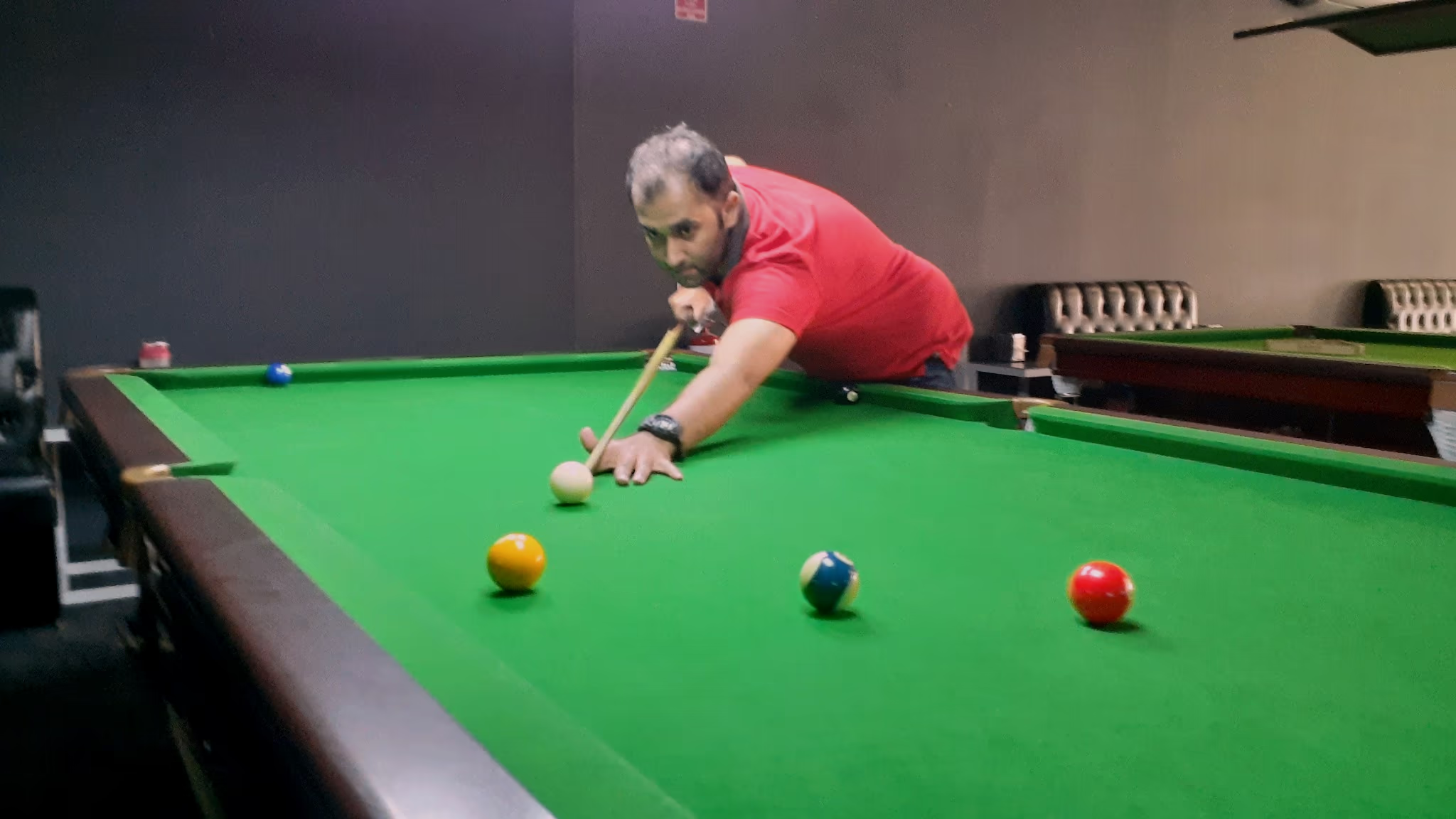
An hour on one of the twelve-foot tables with someone watching your cue action rather than the score. Most people book a run of them a week or two apart; the first one is mostly finding out what you already do well.
- The table
- A full-size snooker table, 12 ft by 6 ft, under its own light raft.
- Who
- One-to-one, or in a pair if you want to learn alongside someone.
- How long
- By the hour. Table time is charged at the usual rate; the coaching is arranged on top.
- When
- Afternoons are quietest and the best time for it.
- Arranging one
- Ring us or ask at the counter and we will find a time that suits.
The one that matters most
Where the cue ball has to arrive for the object ball to go where you want. Find the dashed circle, play at that, and ignore the object ball entirely.
What the first lesson fixes
Five corrections, counting the one above. They work on any table anywhere, and you can start on them before you have booked anything.
- You are aiming at the wrong thing
Almost every beginner aims the cue ball at the object ball. The cue ball has to arrive where the diagram above shows, one ball’s width back from the object ball, on the line from the pocket through it. Aim at that empty space, not at the ball. This is the single correction that changes the most shots.
- Your bridge hand is moving
The hand the cue rests on should be a fixed object. Spread the fingers, press the heel into the cloth, and let nothing about it move during the stroke. A bridge that shifts by two millimetres moves the cue tip by a great deal more by the time the ball reaches the far end.
- You are hitting it far too hard
Beginners play nearly every shot at the same speed, and it is a speed chosen to make sure the ball reaches the pocket. Half that pace pots more balls and leaves the cue ball somewhere useful. Power is the last thing to learn, not the first.
- You stop the cue at the ball
The stroke should finish past where the ball was, with the tip low and still. Stopping the cue on contact is what a flinch looks like, and it is what makes a straight shot drift. Follow through and keep the head down until the ball has gone.
The cheapest coaching there is
An hour alone on a table. You get every shot instead of half of them, nobody is waiting, and you can play the same shot twenty times until it stops being luck. It costs the same hourly rate as playing with a friend and improves you roughly twice as fast.
Young players
Junior coaching and school-holiday sessions are arranged the same way, by ringing or asking at the counter. Because no alcohol is served, a young player can be in the room with an adult at any hour we are open.