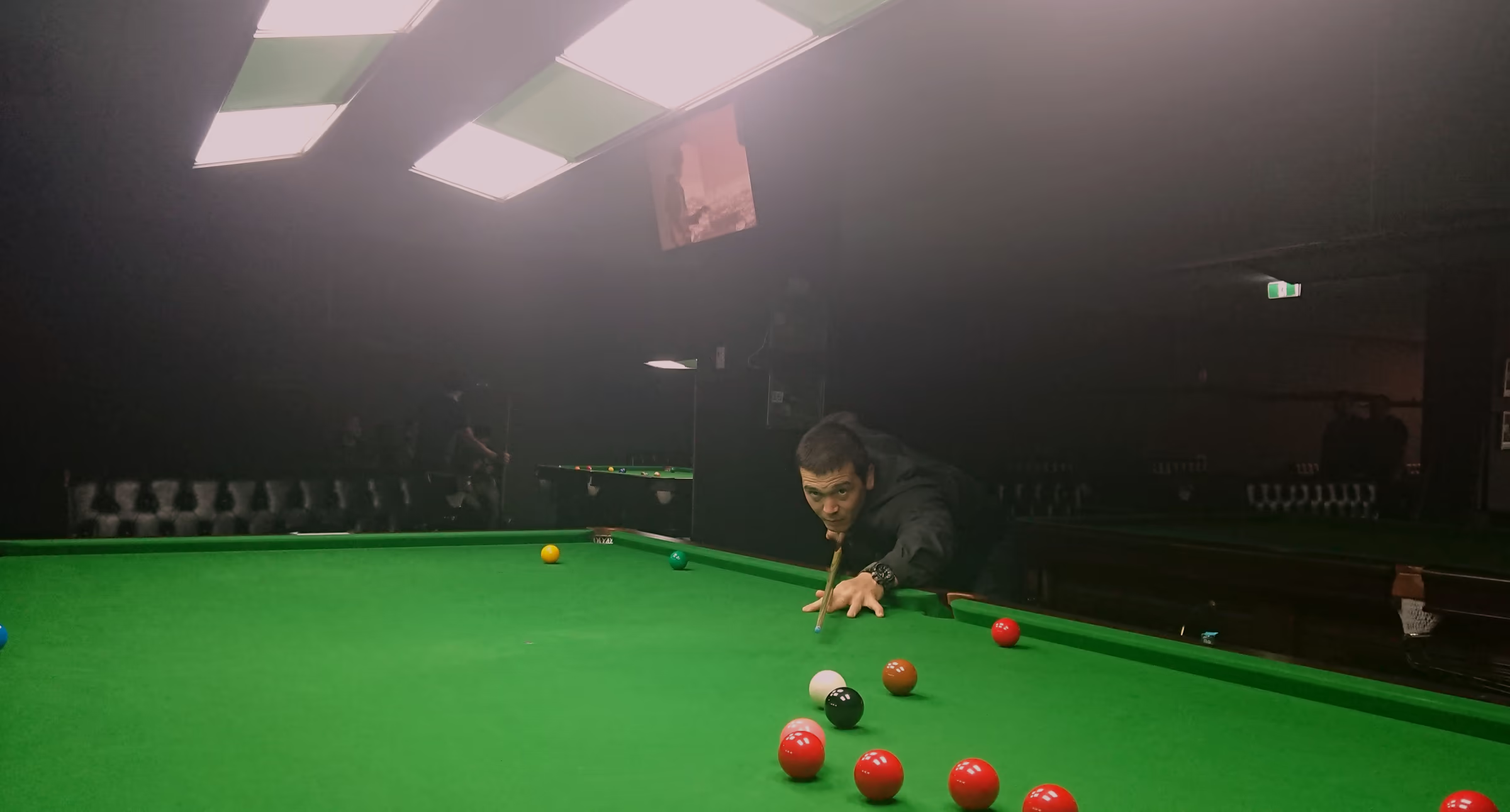
Guides6 minute read
Your first hour of snooker
A full-size table is enormous and that is the whole problem. An hour’s worth of things to actually do about it.
Why you need a plan at all
An hour on a full-size table with no plan produces about forty minutes of hitting balls hard at pockets and twenty minutes of quiet disappointment. The table is big enough that random practice teaches almost nothing, because you never play the same shot twice.
The hour below is one that competent players actually use. It is not gentle and it is not designed to make you feel good in the first ten minutes.
First 5 minutes
Find out how fast the cloth is
Put the cue ball on the brown spot and roll it up the table and back, at the gentlest pace that returns it to you. Do it ten times. You are not practising anything — you are calibrating, because a well-brushed cloth runs considerably faster than a tired one and every judgement you make for the next hour depends on knowing which you are on.
Next 10 minutes
The straight blue
Cue ball on the brown spot, blue on its own spot, pot it into either middle pocket. It is dead straight, it is not far, and it is the most useful shot in snooker practice because it fails visibly: if the cue ball does not come straight back down the table afterwards, you did not hit it in the middle.
Twenty of these. Watch the cue ball after the pot, not the blue.
Next 15 minutes
Pot a colour, then get on the next one
Put the yellow, green and brown on their spots and pot them in order — but the rule is that you have to leave yourself a shot at the next one. If you pot the yellow and end up snookered behind the pink, you failed, even though the ball went in.
This is the moment most people realise what snooker actually is. Potting is the easy half.
Next 15 minutes
The long red
Cue ball in the D, red on the pink spot, pot it into a top corner. You will miss most of them, and that is expected: this is the longest routine shot in the game and it is where the gap between a beginner and a club player is most visible.
The correction is almost always the same two things. Your bridge hand moved, or you stopped the cue at the ball instead of following through.
Last 15 minutes
Play a frame badly
Rack the reds and play properly — red, colour, red, colour — even though it will be slow and the break will be about six. The point is to make the order automatic, so that next time you are not thinking about which ball you are on while also trying to hit it.
The one thing to understand first
Aim at where the cue ball has to arrive, not at the ball you are trying to pot. The dashed circle below is that place: one ball’s width back from the object ball, on the line running from the pocket through it.
Almost every beginner aims at the object ball itself, which sends the cue ball into its centre and the object ball somewhere other than the pocket.
Three habits worth building on day one
- Chalk before every shot you care about. It takes two seconds and prevents the miscue that ruins the shot after it.
- Get your chin down on the cue. Almost everybody stands too upright at first. Your eye should be more or less along the shaft.
- Stay still until the ball has stopped. Standing up during the stroke is the single most common cause of a miss that felt right.
What to expect
You will not make a break. You may not pot a long red all hour. If you came from pool, the table will feel roughly twice as difficult as it looks, because it is roughly twice as big. All of that is normal and none of it is a reason to conclude the game is not for you after one visit.
The tables at Shot N Pot, or the pool version of this hour if today is not the day.