Guides5 minute read
Your first hour of pool
Pool forgives more than snooker does, which is exactly why bad habits set in fast. What to watch in your first hour.
Pool’s problem is that it is easy enough
Snooker tells a beginner immediately that they cannot do it. Pool does not: the pockets are generous, the distances are short, and balls go in from the first ten minutes. That is why it is the right table to start on, and it is also why people who have played for ten years are often no better than they were after one.
Everything in the hour below is about the cue ball rather than about potting, because potting will look after itself and cue ball control will not.
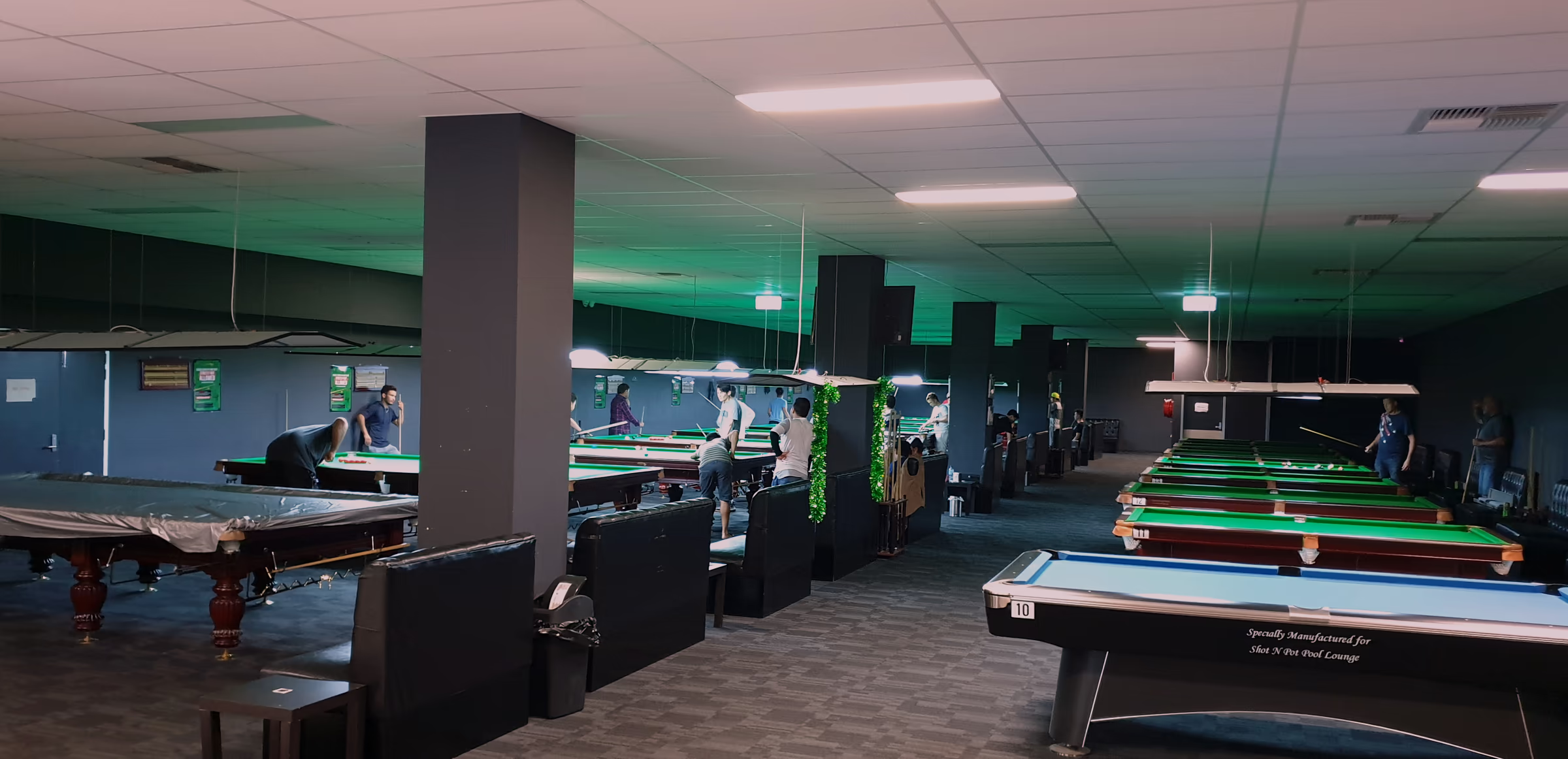
The cue ball behind the head string, which is where it starts and where it returns to after a foul under some rule sets. Shorter than snooker, wider pockets, and far more forgiving of an imperfect strike. Our pool tables are eight foot, shorter again.
First 5 minutes
Hit the cue ball where you think you are hitting it
Put the cue ball in the middle of the table with nothing else on it and play it straight up and down, cushion to cushion, five times. If it comes back to you, you struck the centre. If it drifts left or right, you did not — and every shot you play for the next hour will carry that same drift.
Next 10 minutes
Stop the cue ball dead
Object ball a foot from a pocket, cue ball a foot behind it, dead straight. Pot the object ball and make the cue ball stop exactly where the contact happened.
This is the most useful shot in pool, because it means you know where the cue ball will be afterwards. Struck a fraction low it stops; a fraction high it follows through. That difference is most of what separates a player from somebody hitting balls.
Next 20 minutes
Three balls, in order, no cue ball rules
Put three balls out at random and pot them in the order you chose before you started. The order is the whole exercise. Pool is easy enough that a beginner can pot things by accident, which teaches nothing; committing to a sequence in advance is what turns the hour into practice.
When you miss, put them back and start again rather than carrying on.
Next 15 minutes
Play the break properly
Rack, break, and watch what actually happens rather than how loud it was. A good break spreads the balls and leaves the cue ball near the middle of the table. A hard break with the cue ball in a pocket is worse than a medium one that does not. Most beginners break at maximum power for the whole of their first year.
Last 10 minutes
Play a frame against somebody
Agree the rules first — two shots or ball in hand on a foul, and whether the black pocket is called. Then play. Having spent forty minutes on the cue ball rather than on potting, you will notice the frame feels different even if you lose it.
The bridge
The hand the cue rests on. Spread your fingers, press the heel of the hand into the cloth, and raise your thumb against your index finger to make a V for the cue to run in. It should be about eight inches behind the cue ball and it should not move at any point during the shot.
Nearly everybody’s bridge is too loose and too close for the first month. Nothing else you fix will matter as much.
Where to go next
The rules, and the four things people argue about, or the snooker version of this hour when you want the harder table.