Guides4 minute read
Table etiquette
The unwritten rules of a snooker room, written down — so nobody has to learn them by being glared at.
None of this is enforced and nobody will say anything if you get it wrong. It is written down here because the alternative way to learn it is by noticing, halfway through an evening, that somebody has been quietly waiting for you to sit down.
Almost all of it turns out to be practical rather than social, and several of the rules exist to protect your own game rather than anybody’s feelings.
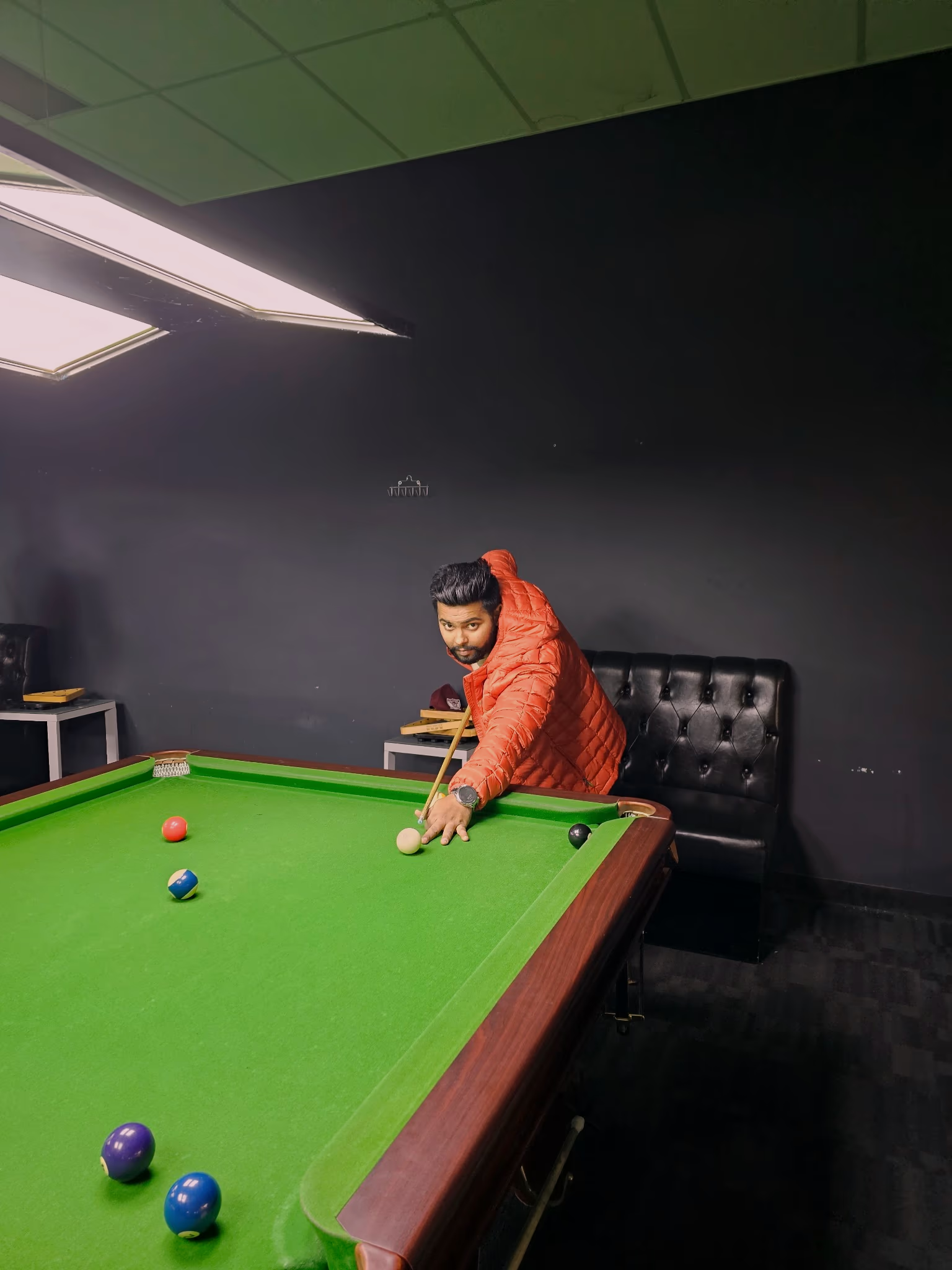
Sit down when it is not your shot.
Standing near the table while somebody else is playing is the one thing every experienced player notices. Sitting down is most of the etiquette there is.
Stay out of the line of the shot.
If you can see the pocket they are aiming at, you are probably in their eyeline. Move behind them, not across.
Do not talk during the stroke.
Between shots is fine, and in a club room it is most of the point. From the moment somebody gets down on the cue, wait.
Nothing goes on the table or the rail.
Not a drink, not a phone, not a wallet. A spilled drink on cloth is a repair, not a wipe.
Chalk over the floor, not over the cloth.
Chalk dust on the bed of the table affects how the balls run, and it is the club that has to brush it out.
Call your own fouls.
Including the ones nobody saw. This is universal at every level of cue sports and it is the reason the games work without a referee.
Use the rest without apologising for it.
Stretching across a full-size table instead is how people fall on the cloth. The rest is on the wall because the table is twelve feet long.
Do not lean on the cushions.
They are rubber and they are set to a tolerance. Sitting on the rail is how a table stops playing true.
Say when you are finished.
Rack your cue and tell the counter, rather than drifting out. Where time is charged by the hour this is the difference between a clear bill and an argument.
Offer to rack.
Whoever lost racks, by long custom. It is a small thing and it is noticed.
What is not etiquette
Being bad at it. Nobody in a club room cares how well you play, and the idea that beginners are unwelcome is almost entirely something beginners bring with them. The people who have been playing for thirty years were all hopeless once and most of them remember it clearly.
Nor is using the rest, taking your time, or asking somebody what a rule means. All three are ordinary.
The one that is specific to paying by the hour
Say when you are done. Here the clock stops when you rack your cue and tell the counter, and you are charged to the quarter hour, rounded down. That only works if the counter knows you have finished, so tell them rather than drifting out. How the clock works.