Guides5 minute read
The snooker table, explained
Baulk, the D, the spots and every named part of a full-size table, drawn to the real measurements.
The numbers
- Playing area
- 3569 × 1778 mm (11 ft 8½ in × 5 ft 10 in)
- Height
- 851 to 876 mm from floor to cushion top
- Baulk line
- 737 mm from the baulk cushion
- Radius of the D
- 292 mm
- Black spot
- 324 mm from the top cushion
- Ball diameter
- 52.5 mm
- Reds
- 15, racked in a triangle below the pink
These are the governing body’s figures for a full-size table, and the drawing above is built from exactly these numbers rather than sketched to look right.
The parts, named
- Baulk line
- The straight line across the table 737 mm from the bottom cushion. Everything behind it is baulk.
- The D
- The semicircle of 292 mm radius drawn on the baulk line. The cue ball is played from inside it at the start of a frame and after being potted.
- Yellow, green, brown
- The three baulk colours. Brown sits on the middle of the baulk line, with green and yellow at the two ends of the D — green on the left as you look up the table, yellow on the right.
- Blue spot
- The exact centre of the table. The blue is the ball most often used to move the cue ball from one end of the table to the other.
- Pink spot
- Halfway between the centre spot and the top cushion. The reds are racked immediately below it, almost touching.
- Black spot
- 324 mm from the top cushion — closer to it than most people expect, which is why the black is so often awkward.
- Cushions
- The rubber rails. Snooker cushions have rounded pocket jaws, which reject a ball arriving at an angle that a pool pocket would accept.
- Top and bottom
- The top of the table is the black end; the bottom is the baulk end. This confuses everybody at first, because the “top” is the far end from where you break.
Why the spots are where they are
The layout is not arbitrary. The colours run up the table in ascending value — yellow, green and brown at the baulk end, blue in the middle, pink and black at the top — so the more a ball is worth, the further it sits from where you start.
The black at 324 mm from the top cushion is the detail that surprises people. It is close enough to the cushion that a cue ball behind it has very little room, which is why so many breaks end on the black rather than on anything harder.
Are our tables this one?
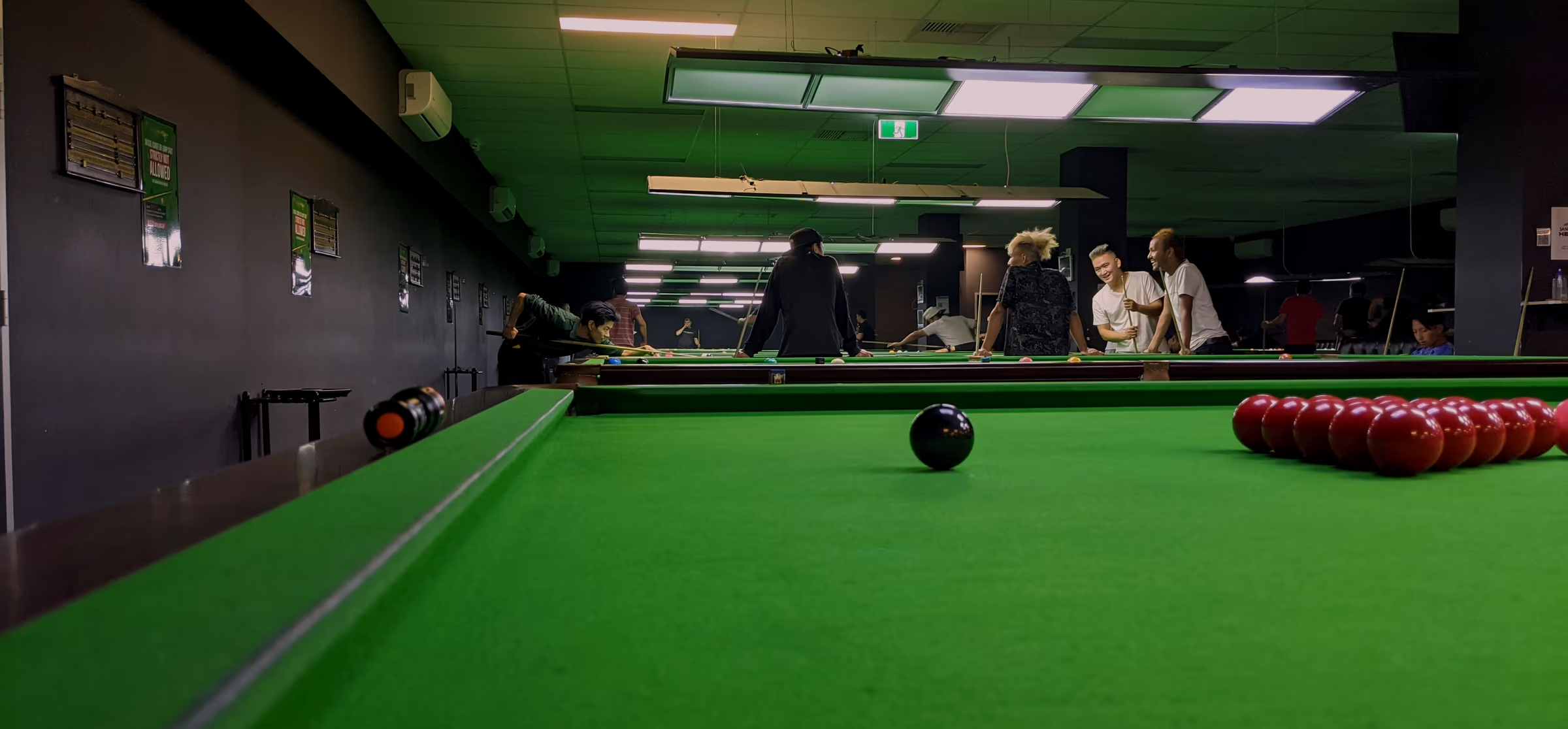
Yes. All eight snooker tables in the long room are full-size, 12 feet by 6, with the baulk line, the D and the spots exactly where the drawing above puts them. What you learn on this page is what you will find under the lights. The tables and the cues.