Guides5 minute read
Pool or snooker?
Two games on green cloth that share almost nothing else. Four questions settle which one you want tonight.
Snooker — 3569 × 1778 mm
American pool, 2235 × 1118 mm
Drawn at the same scale. A full-size snooker table has roughly twice the playing surface of an eight-foot pool table, and almost every other difference between the two games follows from that one fact.
The short answer
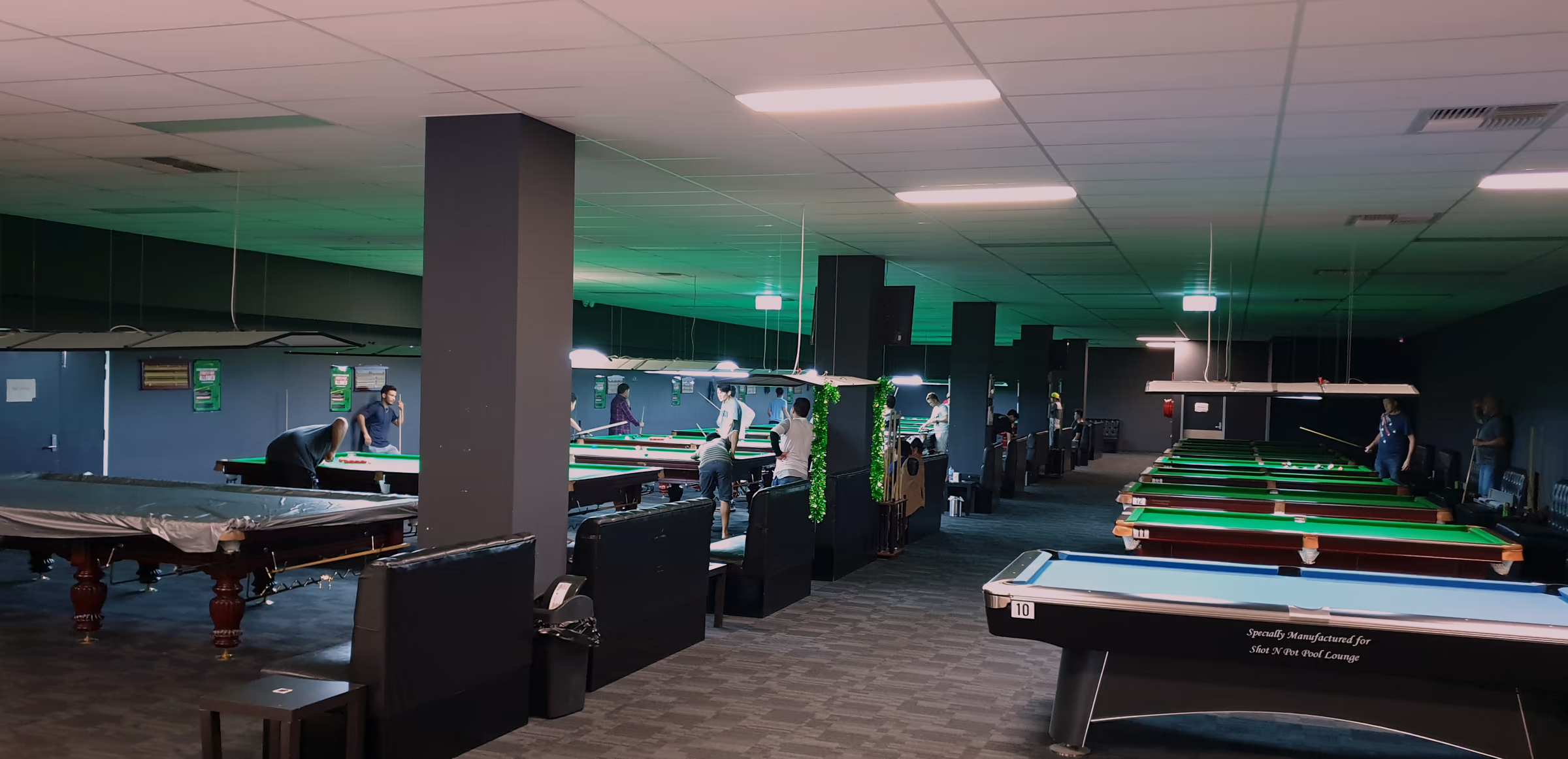
If anybody in your group has not played before, take a pool table. If you want the game that is genuinely difficult and has a room built around it, take snooker. Shot N Pot has both, so it is a decision you make at the counter rather than one that decides where you go.
Why the size changes everything
A snooker table is about twice the area of a pool table, which means every shot is roughly twice as long. Distance magnifies error: a cue tip two millimetres off centre matters very little over a metre and misses the pocket entirely over three.
Then there are the pockets. Snooker pockets have rounded jaws that turn a ball arriving at the wrong angle straight back out; pool pockets are cut square and wider, and will accept a ball that snooker would reject. This is the reason a competent pool player can have a miserable first hour on a full-size table without doing anything obviously wrong.
Four questions that settle it
| Question | Pool | Snooker |
|---|---|---|
| How long is a frame? | Five to fifteen minutes. An hour is three or four frames for two people. | Twenty minutes to an hour between beginners. An hour may be one frame. |
| How many balls? | Sixteen. Seven each plus the black, and the cue ball. | Twenty-two. Fifteen reds, six colours, and the cue ball. |
| How hard is a straightforward pot? | Generous. Square-jawed pockets accept a ball arriving at an angle. | Unforgiving. Rounded jaws reject anything not struck cleanly. |
| What does a beginner feel after ten minutes? | Encouraged. Balls go in more or less by accident. | Humbled. Balls do not go in, and it is not obvious why. |
| Can four people play? | Comfortably — doubles, or winner stays on. | Not really. Two is the number; a third is watching. |
| What does it reward? | Angles, and clearing up without leaving a mess. | Cue ball control over long distances, and patience. |
The case for starting on snooker anyway
There is one, and it is not sentimental. A player who learns on twelve feet of cloth finds every smaller table easy afterwards; the reverse is not true. If you think you are going to keep playing, an hour a week on a snooker table will make you better faster than three hours on a pool table, even though it will be less fun for the first month.
If you are coming once, for an evening, with four friends, none of that applies. Take the pool table.
What it costs, either way
Table time at Shot N Pot is charged by the hour rather than by the frame, and the rate is the same for both games: $18 an hour for the table, with cues, chalk and balls included. The rate card.
Next, whichever you chose: how snooker scoring works or the pool rules, plainly.