Guides7 minute read
How snooker scoring works
Reds and colours, why the colours keep coming back, and how a frame actually ends. It is simpler than watching it suggests.
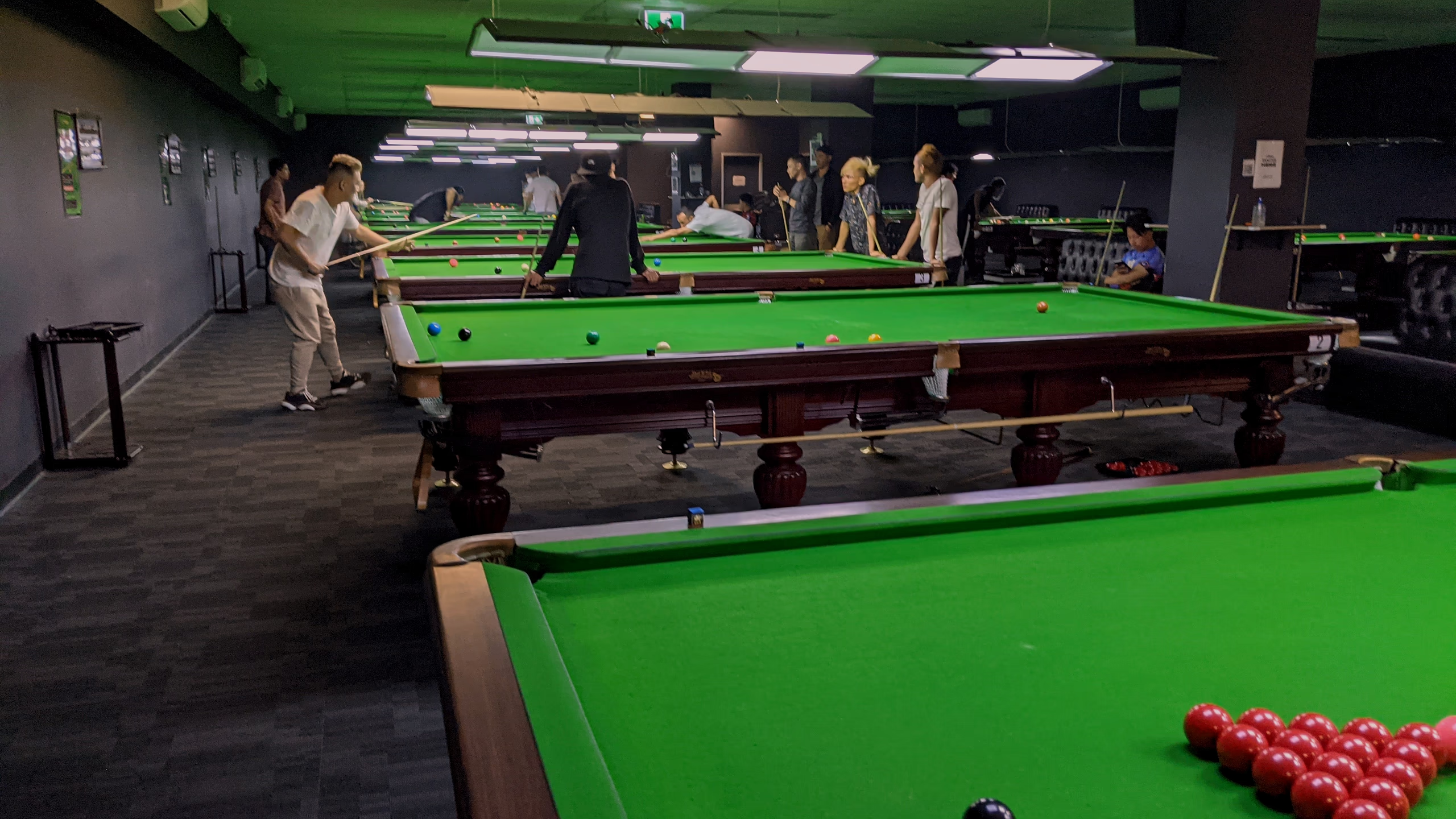
The table as it starts: fifteen reds racked below the pink, and the six colours on their own spots. Everything about scoring follows from where those balls are.
The whole thing in two sentences
You must pot a red, then a colour, then a red, then a colour, and so on until the reds run out. Colours go back on their spots every time, right up until the last red has gone — after which they are potted in order, lowest to highest, and stay down.
That is the game. Everything else on this page is the consequences of those two sentences.
What each ball is worth
- 1red
- 2yellow
- 3green
- 4brown
- 5blue
- 6pink
- 7black
Reds are worth one each and there are fifteen of them. The colours run two to seven in the order yellow, green, brown, blue, pink, black — which is also the order they are cleared in at the end, and the order they sit in on the table from the baulk end upwards, which is not a coincidence.
Why the colours keep coming back
A red is potted and stays down. The colour that follows it is potted, and then replaced on its own spot. So while any red remains on the table, all six colours are available every time it is your turn at one.
This is what makes a big break possible. Fifteen reds, each followed by a black, is fifteen times eight — a hundred and twenty — and then the six colours in order add twenty-seven more. A hundred and forty-seven, which is the maximum, and the reason a commentator gets excited when somebody keeps going back to the black.
A break
A break is everything you score in one visit to the table, from the moment you start until you miss or foul. Beginners make breaks of four. A good club player makes thirty. A century break — a hundred in one visit — is the number that marks a serious player, and it requires potting somewhere around fourteen balls in a row while leaving the cue ball somewhere useful each time.
Which is the real game: not potting, but where the cue ball stops afterwards.
Fouls
A foul gives your opponent points. The minimum is four, and it goes up if a more valuable ball was involved — so a foul on the black gives away seven.
The usual ones:
- Potting the cue ball.
- Hitting a ball you were not on — a colour when you were due a red.
- Failing to hit any ball at all.
- Potting the wrong ball.
- Knocking a ball off the table.
Between friends, most fouls are settled by one person saying “that’s four” and the other agreeing. Nobody is keeping the score sheet in a club room on a Tuesday.
Being snookered
You are snookered when you cannot hit any part of the ball you are on in a straight line — another ball is directly in the way. You still have to try, and you still foul if you miss, which is why it is a weapon rather than an inconvenience.
This is the half of the game nobody notices at first. Good players who cannot pot a ball do not play safe by accident; they leave their opponent unable to hit anything, collect four points from the foul, and get the table back. A frame can be won entirely this way.
How a frame ends
When the black is potted, or when the player behind concedes because there are not enough points left on the table to catch up. Highest score wins the frame; a match is a number of frames.
The arithmetic of “enough points left” is why you will see a player shake hands with balls still on the table. If you are thirty behind with only the blue, pink and black remaining — eighteen points — you cannot win, and everybody at the table knows it at the same moment.